Imagine a book filled with thousands of pages, yet light enough to carry comfortably and easy to open wherever you go.How is that possible?
For religious books such as the Quran and the Bible, paper plays a surprisingly important role. These books are often read repeatedly, passed between generations, and kept for many years. While readers focus on the words, publishers must also consider what lies beneath them: the paper.
The Challenge of Making Every Page Count
The more pages a book contains, the more its paper affects the final size and weight.
Using thicker paper can make a book bulky, while thinner paper allows more content to fit into a smaller volume. But there is a trade-off. If the paper is too thin, text printed on the reverse side may become distracting, and the pages may be more difficult to handle.
The real challenge is not simply making paper thinner. It is finding the right balance between lightness, readability, and durability. Bible paper thickness and grammage should be matched to the edition’s page count, print layout, and binding requirements.
Quran Paper: Clarity in Every Detail
Printing the Quran requires careful attention to the presentation of Arabic text, including connected letters and reading marks. Clear text reproduction is essential, and the paper must work well with the chosen printing process.
Opacity also matters. When text appears on both sides of a page, excessive show-through can affect reading comfort.
At the same time, lightweight paper can help reduce the thickness of books with many pages. The goal is to achieve a compact format without compromising print quality or the practical demands of folding and binding.
Bible Paper: More Pages, Less Weight
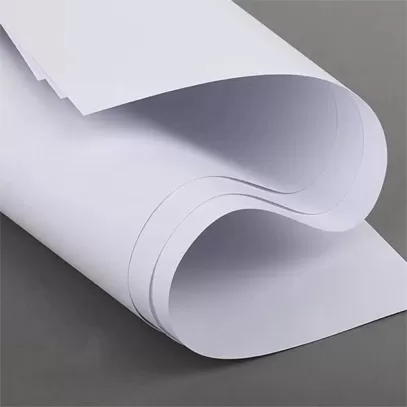
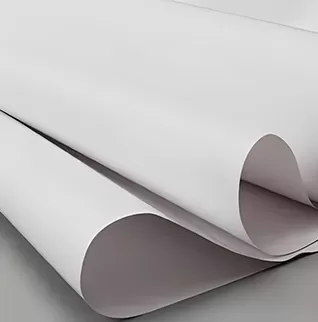
Many Bible editions contain extensive text, references, footnotes, and supplementary material. Keeping such books manageable can be a challenge. This is where thin, lightweight paper, often called Bible paper, becomes valuable. It helps publishers fit substantial content into a relatively compact book. If you are wondering what is bible paper made of, it is a thin, lightweight printing paper engineered for opacity and strength, so that text on the reverse side does not show through.
However, thinness alone is not enough. The paper must still support readable printing, limit distracting show-through, and withstand normal handling.
Different editions have different needs. A pocket Bible may prioritize portability, while a study Bible may need to accommodate additional notes and references. Paper selection must reflect the design of the finished book.
Two Traditions, One Important Question
Quran paper and Bible paper serve different publishing traditions, but both illustrate the same principle: the right paper can make a significant difference to the reading experience.

There is no single paper specification suitable for every edition. Typography, page layout, printing methods, and binding requirements all influence the final choice.
That is why testing paper samples under actual printing conditions is often more useful than selecting a grade based on grammage alone.
The Best Paper Is the One Readers Hardly Notice
When a book feels comfortable to hold and easy to read, few readers stop to consider why. Yet behind that experience are decisions about paper weight, surface quality, opacity, and strength.
For publishers and printers, choosing paper is about more than reducing thickness or cost. It is about making the entire book work as intended.
At China Paper, we recognize that every printing project has its own requirements. Understanding the finished book is the first step toward identifying suitable paper solutions.
Sometimes, the most important part of a book is the part readers never think about.
 English
 français
 Deutsch
 Español
 italiano
 русский
 português
 tiếng việt
 Türkçe
 العربية
 Indonesia